|
The Lion, The Witch And The Wardrobe
|
|
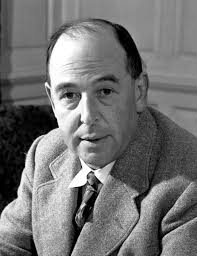
It has taken me decades − literally − to finally pick up another C.S. Lewis book and read it. In high school I read Lewis' book, "That Hideous Strength" and completely missed Lewis' message. One decade later I read Lewis' "Mere Christianity" and fully understood what Lewis was saying. With The Lion, the Witch and the Wardrobe, part of C.S. Lewis' Chronicles of Narnia series, the gospel message is clearly made evident in an allegorical/mystical style. Lewis used the Narnia series to explain Christ's love for humankind to children, who are the series' principal readers.
This first novel in a series of seven books is currently a major motion picture now completing a successful run on theatre screens across the U.S. I have yet to see the movie, a Disney production, but I understand that it holds very true to Lewis' storyline. I expect to see the movie before it leaves theatres later this month; it will become available on DVD this April.
Back to the story! The theme of "The Lion" centers around four children, the Pevensie siblings, who get caught up in a land of magic. Entering "Narnia" through a wardrobe [a tall cabinet that holds clothes] - located in a home where they are boarding - the children enter a land where it is always winter, but never Christmas. Under the spell of the White Witch, Narnia is forever in the grip of evil. The land is occupied by talking animals [beavers, for one], spirits, goblins, sprites, but no humans. That is until Lucy Pevensie shows up followed by her brother Edmund and, later, Susan and Peter.
Quite obviously the White Witch a/k/a the Queen of Narnia is most interested in humans so she resorts to all sorts of magic and trickery to lure them in. Edmund, the most impressionable of the siblings, is quickly captivated by the White Witch and then sets out to betray the others.
Without giving away the storyline, the theme of Narnia clearly reflects the captivity of this present world under Satan, but its past and future deliverance through Jesus Christ. In the form of a lion, Aslan, Lewis brings a savior to Narnia who eventually releases the land from its winter grip and vanquishes the White Witch.
For those unfamiliar with the gospel message, The Lion, the Witch and the Wardrobe may be hard to follow. However, Lewis wrote the book in 1950 immediately after the horrors of Word War II and with the Nazi air battle for London fresh in the minds of British citizenry. Lewis may have been responding to a strong spiritual hunger of his time when he wrote the series as "Narnia" successfully points seekers to Aslan, much as the Bible points readers to Jesus Christ.
I am not sure if I will read the remaining six books in this series, but I am definitely interested in exploring several other writings of Lewis.
C.S. Lewis, J.R.R. Tolkien, and Charles Williams were contemporaries who were a part of a group of writers and intellectuals known as The Inklings who met during the 1930s and 1940s at a public house in Oxford. Tolkien, like Lewis, used Christian allegory in many of his writings including, The Lord of the Rings, another series of books that was recently released as a major motion picture.
Clearly, the renewed interest in C.S. Lewis' works is a positive step especially for a generation of children not familiar with the gospel message. Disney, for their part, is interested in developing the remaining six books of the series into individual movies. So, expect Narniamania − as some have called it − to continue unabated for many years to come.
Date Added: Wednesday, 12-10-2025 09:18:09 PM
|
|
|
C. S. Lewis: The Magician's Nephew
|
|
"The Magician's Nephew is chronologically the first book in the Narnia series by C. S. Lewis. Set about 50 Years before the events in "The Lion, the Witch and the Wardrobe", it describes how the land of Narnia came into being.
If you watched the recent movie "The Lion, the Witch and the Wardrobe", you might have wondered about two details: why does a wardrobe lead into the magical land of Narnia, and why does Lucy find a lantern burning in the middle of a forest?
"The Magician"s Nephew" answers these questions (though I will not give the answers away in this review) and many more. The novel contains the genesis (literally) of the entire Narnia cycle.
The story begins in late 19th-century London, when two children, Polly and Digory accidentally enter the secret study of Digory's eccentric uncle Andrew while exploring a passage that connects the attics of several houses.
The uncle is actually a magician, and he tricks Polly and his nephew into performing an experiment involving magic rings. These rings transport the children into the "Wood between the Worlds", a quiet forest that contains numerous small pools serving as gates to other worlds. Polly and Digory jump into one of the pools and explore the ruined city of Charn, where Digory is faced with a great temptation. A sign on a small bell next to a sleeping woman proclaims:
Make your choice, adventurous Stranger,
Strike the bell and bide the danger,
Or wonder, till it drives you mad,
What would have followed if you had.
Digory is unable to resist and strikes the bell, which has momentous consequences. The sound awakens the woman, Empress Jadis, who had destroyed the entire city of Charn with a curse thousands of years ago. She manages to follow the children to London, and scenes of hilarious mayhem ensue.
Eventually, the two children, the uncle, the cruel Empress and a cabbie and his horse are transported back to the Wood between the Worlds and from there to a new world that is just coming into being - Narnia.
The creation of Narnia is described in poetic detail, and afterwards Digory has to atone for his earlier mistake by resisting another temptation - the fruit from the forbidden tree. The history of Narnia begins, but the shadow of evil (the Empress will one day return as the White Witch) and the future necessity of Aslan's sacrifice are already hinted at.
Sound plays an important role in this novel: there is the drowsy stillness of the Wood between the Worlds, the barren silence of the city of Charn shattered by the bell, the harmony of the celestial spheres and the creative song of Aslan's voice. All this makes "The Magician"s Nephew" a true prelude to Narnia.
Date Added: Thursday, 10-23-2025 09:06:28 PM
|
|
|
The Chronicles Of Narnia - The Lion, The Witch And The Wardrobe Review
|
|
One of the great children's classics by C.S. Lewis, is brought to the screen in The Lion, the Witch and the Wardrobe. Set in wartime England, its plot has the four Pevensie children sent out of London for their safety. They end up in the country house of the eccentric Prof. Digory Kirke, and like all children removed from their usual source of fun and amusement, they're bored, bored, bored.
Then one day, Lucy begins poking into things, and one of them is the very odd wardrobe of the professor's. What she sees inside, is not the professor's clothes, but a world encased in snow. The others of course, don't believe her, since they haven't found anything half so interesting. But eventually they give in to their own curiosity, and all enter the wardrobe to find themselves transported to the world of Narnia, where an evil White Witch has created an eternal winter, that will never see a Christmas.
Meeting up with the kind and caring lion Aslan who rules the strange land, the children begin their trek towards defeating the witch. But along the way, one will fall behind and join the very forces of evil they are trying to defeat. Amongst the mysteries of talking animals, mythical creatures and magic spells, the children must free Narnia from the perilous cold, and one of their own, from dangers that could destroy them.
This movie was extremely engaging from beginning to end, even at a long 2 hour and 20 minute running time. Perhaps, it's because it was one of my favorite novels growing up, but the young actors were quite engaging and Tilda Swinton was superb as the White Witch.
Just one note of caution to parents: The movie was rated "Parental Guidance Suggested" and parents should be aware. The movie definitely has numerous violent scenes and it's certainly not for little ones.
Director: Andrew Adamson
Producers: Perry Moore, Philip Steuer, Andrew Adamson
Starring: Tilda Swinton, James McAvoy, James Cosmo, Jim Broadbent, Elizabeth Hawthorne
Date Added: Wednesday, 10-08-2025 02:57:10 AM
|
|
|
C. S. Lewis: Prince Caspian
|
|
If you recently watched the very popular Disney movie "The Lion, the Witch and the Wardrobe", you might be aware that C. S. Lewis wrote a total of seven books about Narnia. These are, in order of the internal chronology of events:
1 - The Magician's Nephew
2 - The Lion, the Witch and the Wardrobe
3 - The Horse and His Boy
4 - Prince Caspian
5 - The Voyage of the Dawn Treader
6 - The Silver Chair
7 - The Last Battle
The novel "Prince Caspian" begins one year after the events told in "The Lion, the Witch and the Wardrobe" on a railroad platform where Peter, Edmund, Susan and Lucy are waiting for trains that will take them to their boarding schools. Suddenly they feel themselves transported into another world, and after a few hours of wandering about they realize that it is Narnia, where many centuries have passed in the meantime.
The second plot line involves young Prince Caspian, heir to the throne of Narnia, who has to flee from his usurping uncle Miraz. Deep in a forest he discovers some of the "Old Narnians" - talking beasts and dwarfs - and later decides to challenge his uncle for the kingship.
Soon, though, the military situation deteriorates for Caspian and his small army, and they end up besieged on Aslan's How, a hill built over the site of the stone table that played a crucial role in "The Lion, the Witch and the Wardrobe". When things look utterly bleak, Caspian uses his most precious object, Queen Susan's Horn, to summon help.
This review does not try to give away too much more of the plot and spoil the reader's enjoyment, so let me just say that the two plot lines intertwine, there are thrilling battle scenes (including a duel) and a wonderful celebration at the end.
Lewis does a good job of showing the gradual re-transformation of the four children, who once again turn from being English schoolchildren to becoming Kings and Queens of Narnia.
To me, "Prince Caspian" is one of the three best books in the Narnia series, together with "The Lion, the Witch and the Wardrobe" and "The Magician's Nephew". In many ways, it repeats themes from "The Lion, the Witch and the Wardrobe", but adds an interesting perspective by having the events of the earlier book become the stuff of legend.
Date Added: Sunday, 09-28-2025 10:48:08 AM
|
|